

Your Guide to Getting Outsourcing Right the First Time

As the construction industry evolves, staying ahead of technological trends has become crucial for architects, engineers, and homebuilders. In 2026, digital transformation is reshaping the sector, with innovations such as modular construction, AI-driven design, 3D modelling/BIM, and IoT-powered smart infrastructure revolutionising every phase of the design-build process.
By adopting cutting-edge technologies, industry leaders can enhance quality, drive innovation, streamline workflows, reduce costs, and improve profitability. Embracing digital tools will play a pivotal role in shaping the future of construction design in 2026 and beyond.
The rapid growth of construction technology is fueling global industry expansion, with the market projected to grow by $8 trillion by 2030. The U.S. remains at the forefront of this transformation, utilising advanced tools such as building information modelling (BIM), IoT, and AI to improve sustainability, efficiency, and project outcomes. As a result, construction output is projected to surge 85% to $15.5 trillion by 2030, solidifying technology as a key driver of industry success. This rapid technological advancement will support the industry in streamlining workflows, reducing cost, boosting accuracy, and accelerating project delivery, giving firms a strong competitive edge in a fast-paced highly competitive sector.
In 2026, the construction sector witnessed rapid digitalisation. According to the Royal Institution of Chartered Surveyors’ (RICS) “Digitalisation in Construction Report 2024“, the adoption of Building Information Modeling (BIM) surged, with 60% of firms integrating it into their processes. This shift improved collaboration, minimised errors, and streamlined project timelines.
Additionally, the modular construction market also saw strong growth, valued at $95.68 billion in 2023 and projected to reach $102.52 billion in 2024, underscoring the industry’s increasing reliance on technology to drive efficiency and innovation.
As the industry moves into 2026, digital transformation continues to unlock new opportunities. The Internet of Things (IoT) in construction is projected to double to $31.49 billion by 2030, signalling a major shift toward connected, data-driven construction sites that enhance efficiency, safety, and real-time decision-making. Additionally, advanced data analytics adoption is expected to grow by 35%, providing deeper insights into project performance and enabling smarter decision-making.
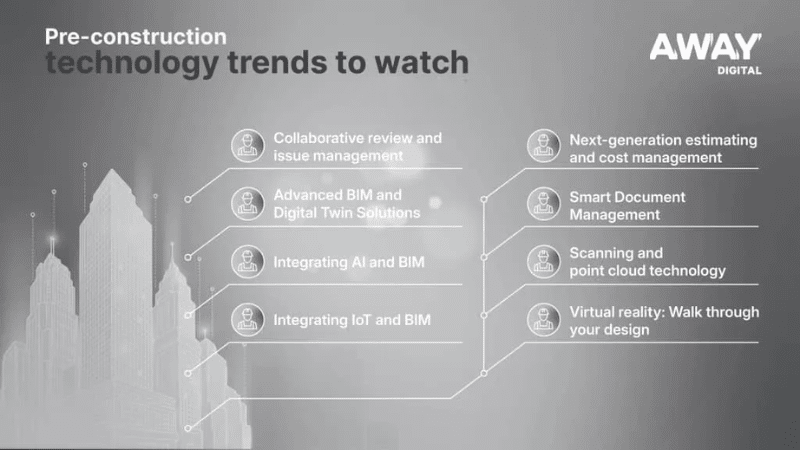
The integration of pre-construction technology now spans all project stages, from initiation to completion, with digital tools playing a critical role in scheduling, planning, estimating, and design. As construction companies increasingly embrace these innovations, they are enhancing collaboration, efficiency, and adaptability, ensuring they can meet the demands of complex projects in a rapidly evolving industry.
The adoption of advanced construction technologies offers significant advantages, including more effective methods for reviewing and tracking issues, real-time 3D model collaboration, and enhanced issue tracking. These technology trends help to boost operational efficiency and ensure projects stay on time and within budget, shaping a more innovative and efficient future for the construction industry.
Construction technologies enable architects, engineers, and homebuilders to coordinate virtually, detecting clashes early and streamlining workflows. Cloud-based platforms enhance efficiency by enabling real-time document sharing, issue tracking, and task management.
Key tools include:
These solutions drive seamless collaboration, increase productivity, and keep projects on track.
BIM and Digital Twin technologies are transforming smart construction in 2025, enhancing efficiency, collaboration, and sustainability while reducing costly rework. These tools detect design clashes, optimise resources, and improve coordination before construction begins.
Cloud-based platforms like Autodesk Construction Cloud integrate BIM and Digital Twin solutions, providing real-time insights and seamless team collaboration. Tools like Revizto’s Issue Tracker streamline communication, track tasks digitally, and keep projects on schedule.
As these technologies advance, they set new benchmarks for smarter, more sustainable construction.
AI and BIM are revolutionising construction by automating tasks, detecting errors early, and optimising workflows. These innovations enhance efficiency, reduce costs, and accelerate project timelines.
Key AI-driven tools leading this shift:
As AI-powered BIM evolves, it continues to drive smarter, more efficient, and sustainable construction.
Integrating IoT with BIM enhances real-time data collection, improves collaboration, and boosts efficiency. It enables proactive decision-making, early issue detection, optimised resource use, and improved safety.
IoT automation streamlines BIM by tracking progress, generating reports, and reducing manual tasks, allowing teams to focus on high-value work. From site monitoring to system optimisation, IoT-powered BIM drives smarter, more sustainable construction.
AI and data-driven technologies are revolutionising cost management by enhancing accuracy, efficiency, and decision-making through machine learning and predictive analytics.
Top cost management software:
These tools streamline estimation, optimise budgets, and improve financial planning in construction projects.
Efficient document management ensures teams have accurate, up-to-date information, reducing errors and risks. Advanced software streamlines collaboration, version control, and automation for faster workflows.
These tools improve efficiency, ensuring smooth project execution.
Point cloud technology captures precise 3D data, enhancing BIM workflows, improving accuracy, and reducing errors, especially in renovations and infrastructure projects.
Advancements in LiDAR, drones, and mobile scanning accelerate data collection, enabling real-time updates and seamless collaboration. Looking ahead, AI automation and cloud-based tools will refine processing and enhance remote access, shaping the future of digital construction.
VR is transforming construction by enabling immersive and interactive and interactive 3D walkthroughs, helping stakeholders visualise projects, spot issues early, and make informed decisions before building begins.
It also streamlines remote design reviews, allowing teams to explore models, provide instant feedback, and reduce costly revisions. Platforms like Away Digital Home integrate 3D BIM with VR, letting customers walk through homes, experience design choices, and access live pricing before construction starts.
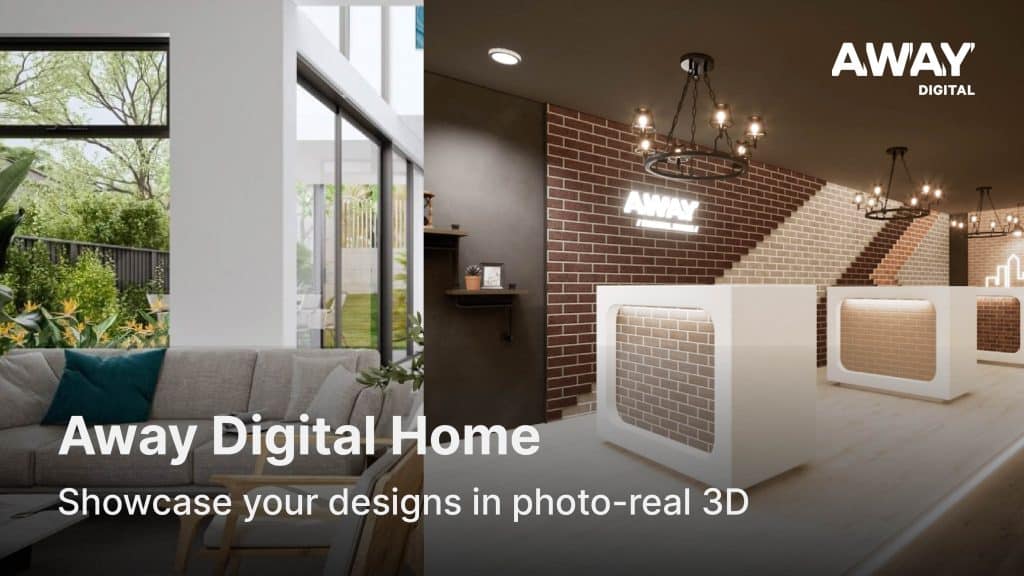
By 2026, VR is expected to become a standard tool in pre-construction planning, allowing for real-time interaction with project models, optimising designs, and significantly reducing risks.
In an increasingly competitive industry, outsourcing is becoming a game-changer for architects, engineers, and homebuilders. By delegating pre-construction tasks to skilled offshore teams, firms can streamline operations, reduce costs, and improve efficiency – all while focusing on core design and project management responsibilities.
The construction industry is evolving rapidly, with cutting-edge advancements transforming how projects are designed, managed, and built. From virtual reality walkthroughs and smart document management to point cloud scanning, AI-driven cost estimating, and digital twin technology, these pre-construction trends are enhancing accuracy, streamlining workflows, and improving collaboration.To stay competitive in 2026, firms must embrace key industry trends, leverage data-driven insights, and optimise workflows with global outsourcing solutions. Explore our guide to getting outsourcing right the first time to learn how to set up an offshore team with a trusted partner, helping you focus on core design and project management while ensuring long-term success in a fast-paced industry.

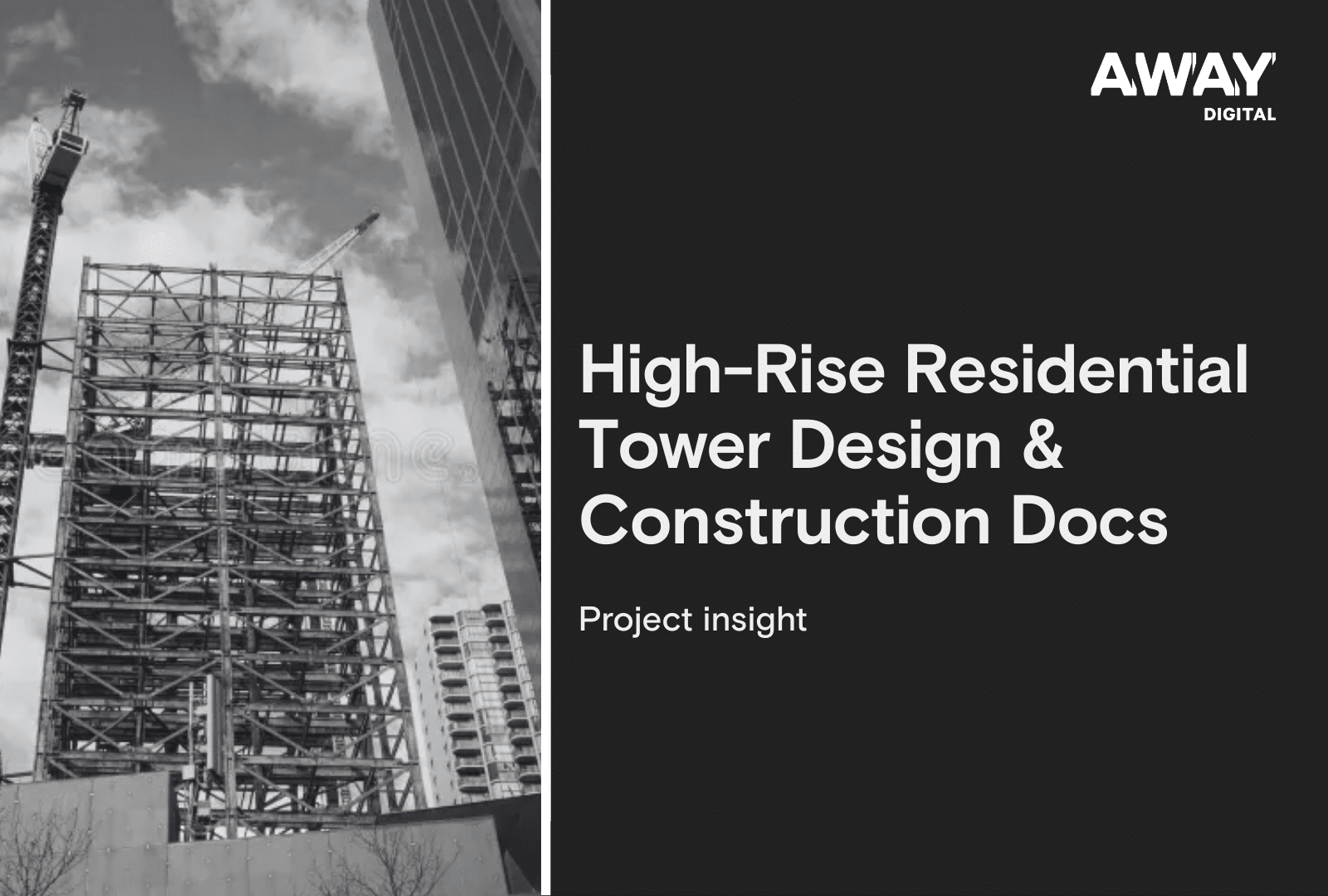
Project snapshot A 55+-storey residential tower in Australia requiring full DD and construction documentation. Away Digital supported the project from model development through to final façade detailing and coordinated service drawings. Project overview Location: AustraliaSector: Student accommodationDuration: 2 years 3 months Scope of work Project stage: Design development and construction drawing packagesScale: 55+-storey tower with […]
Sign up to receive a monthly email on the latest updates, features, and news!
