In the construction industry small inefficiencies often go unnoticed while they quietly drain profits and impact quality. But did you know that 20-30% of your revenue – almost a third – could be lost due to inefficient cost management? On top of that, labour shortages, rising labour costs, and burnt out staff only amplify these challenges, making it harder to stay productive and meet deadlines while managing multiple projects.
By embracing cutting-edge technology and exploring different resourcing models like outsourcing, you can effectively tackle these challenges. Curious to learn how? Discover the strategies to reduce inefficiencies and unlock your organisation’s untapped potential.
FOUR SILENT COSTS OF INEFFICIENCY
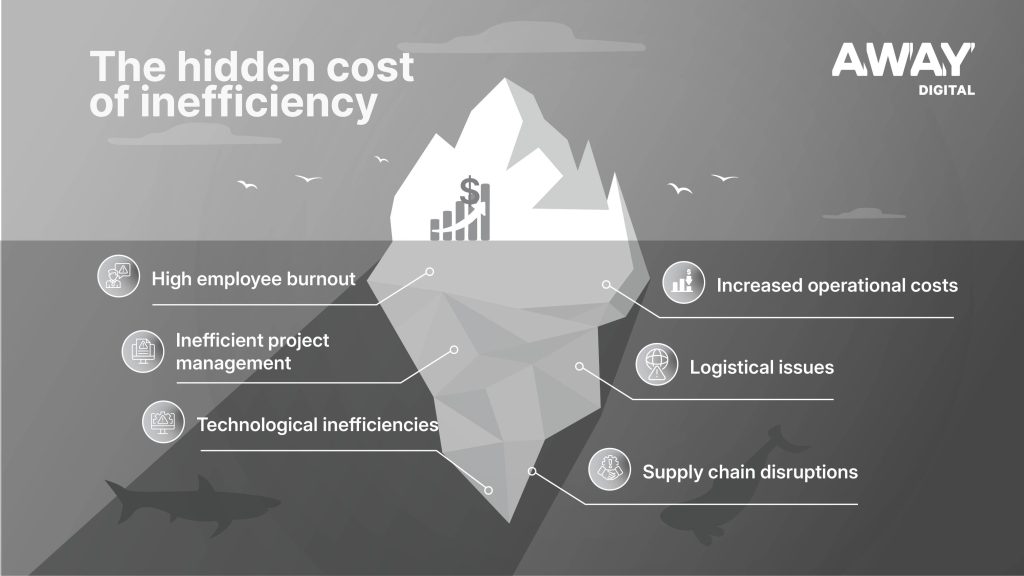
Scaling a business, especially in the homebuilding industry often comes with its challenges, but hidden inefficiencies can quietly drain resources and hinder growth without being immediately obvious. These typically include:
Inefficient project management
Delays and miscommunications inflate costs through penalties, higher overheads, and the need for rework. Unclear timelines and poor resource allocation not only waste valuable time but also hinder productivity, resulting in missed opportunities and slowed business growth. These inefficiencies can ripple across projects, undermining both profitability and client satisfaction.
Poor staff utilisation
Overworking key employees while underutilising others has a considerable impact on productivity and disrupts team dynamics. Inefficient workflows lead to high employee burnout, which impacts work quality, increases turnover rates, and creates challenges in managing workloads. These inefficiencies affect both immediate operations and long-term organisational growth.
Technological inefficiencies
Outdated software can slow workflows, increase errors through manual processes, and hinder overall productivity. The lack of integration disrupts project execution, while outdated technology can stifle creativity, which can lead to uninspired designs that lack individuality. These inefficiencies impact operational effectiveness and the quality of creative output.
Supply chain disruptions
Supply chain disruptions in the construction industry can manifest in various ways, including material shortages, strained vendor relationships, and logistical issues. These challenges lead to delays, inflated costs, and reduced profit margins, creating bottlenecks that affect overall operations. Ultimately, disruptions in the supply chain impact material availability, production timelines, and project outcomes.
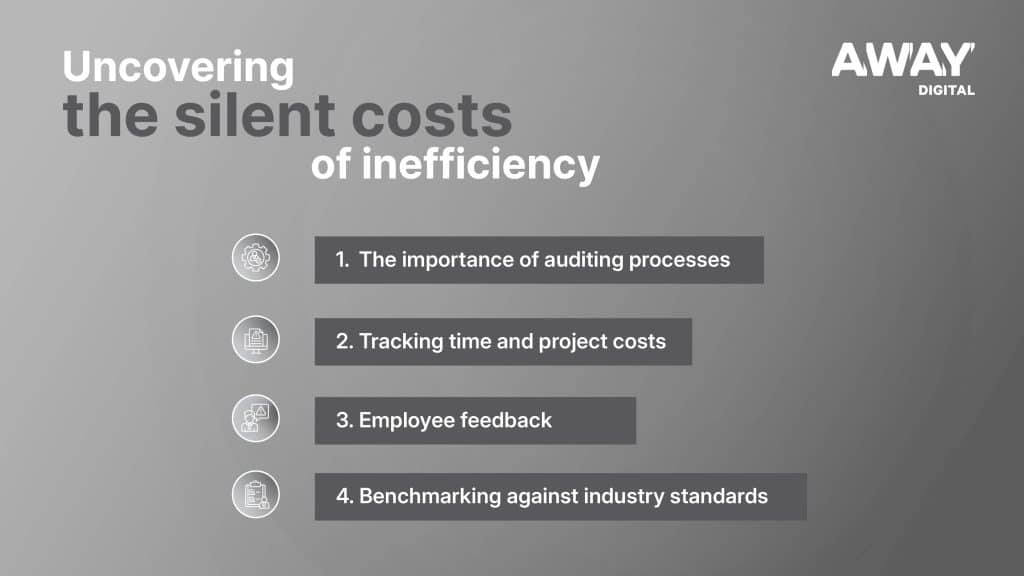
HOW TO UNCOVER THE SILENT COSTS OF INEFFICIENCY
The importance of auditing processes
Auditing processes play a vital role in the construction industry. By conducting detailed reviews, you can identify inefficiencies such as bottlenecks, redundant steps, and wasted resources. These insights enable organisations to streamline workflows, reduce waste, and optimise resource allocation, ultimately improving productivity, cost efficiency, and overall project outcomes.
Tracking time and project costs
Tracking time and project costs is an essential step for identifying inefficiencies and uncovering hidden costs. Through detailed data analysis, you can pinpoint issues in project management, resource allocation, and workflows. Comparing actual performance with budgets and timelines supports smarter decision-making, stronger financial control, and better project outcomes.
However, leveraging data analysis requires addressing challenges such as data accuracy, overload, and privacy concerns. Implementing robust systems ensures effective data management and safeguards sensitive information.
Employee feedback
Employees engaged in daily operations hold valuable insights into inefficiencies that may go unnoticed at the managerial level. Feedback from staff can uncover communication breakdowns, unclear roles, or workflow disruptions. By fostering an open feedback culture, project leaders can swiftly address these challenges, boost operational efficiency, and empower staff, creating a more collaborative and productive work environment.
Benchmarking against industry standards
By comparing your firm’s processes and costs to established industry best practices through benchmarking, you can identify inefficiencies and uncover areas of underperformance. Using methods like comparative analysis and key performance indicators (KPIs), businesses can pinpoint productivity gaps and outdated practices, allowing for the adoption of more efficient strategies.
STRATEGIES TO ELIMINATE INEFFICIENCIES AND SCALE YOUR BUSINESS
Eliminating inefficiencies requires a blend of strategic planning, technology adoption, and ongoing improvements. Here are four key strategies to consider:
1. Investing in technology
Adopting digital tools like Building Information Modelling (BIM) and project management software can streamline workflows, reduce errors, and speed up project timelines. These technologies allow businesses to stay on track, ensure seamless communication, and increase overall project efficiency.
2. Process optimisation
Implementing lean management practices and continuous improvement techniques can help eliminate waste, reduce delays, and ensure effective resource utilisation. Homebuilding companies can enhance efficiency, lower costs, and sell more homes faster by establishing highly effective processes in their organisations.
3. Better resource allocation
Project leaders should focus on improving resource allocation by ensuring the right people are assigned to the right tasks. This involves strategic planning, real-time tracking, and forecasting to ensure that resources, including personnel, are used efficiently to meet project goals. By optimising workforce allocation and refining workflows, businesses can minimise bottlenecks, enhance output, and boost performance without increasing headcount.
4. Optimising procurement and supply chain
Smarter procurement strategies can significantly enhance construction productivity. By leveraging digital platforms to manage suppliers and track materials, businesses can ensure smoother project execution. AI insights help make smarter decisions regarding suppliers, pricing trends, and material availability, reducing costly mistakes.
Additionally, maintaining strong relationships with suppliers can prevent delays and material shortages, ensuring projects stay on track, reducing unexpected costs, and safeguarding profit margins.
LONG-TERM BENEFITS OF ADDRESSING INEFFICIENCY
Addressing inefficiencies can lead to significant long-term benefits.
Sustainable growth
Tackling inefficiencies today sets the stage for long-term growth and stability. With the right strategies, your business can stay competitive and profitable, even in tough market conditions. Enhanced efficiency not only attracts clients but also positions your company as an industry leader, driving market share and reinforcing your standing in the construction sector. Sell more homes, faster.
Improved project margins
Eliminating hidden inefficiencies directly impacts your bottom line by improving project margins. Through better planning, resource allocation, and timely execution, you can keep projects on budget and on schedule, driving profitability without compromising quality or timelines.
Enhanced reputation and client satisfaction
Streamlined processes result in faster project turnarounds, leading to higher client satisfaction. Efficient operations also strengthen relationships, enhance your reputation in the market, and position your business to take on more projects, outpace competitors, and drive revenue growth.
HOW OUTSOURCING CAN HELP REDUCE INEFFICIENCY
Offshore outsourcing in the homebuilding industry offers several benefits that can help reduce inefficiency. Here are four key advantages that could be the solution to your current challenges:
Cost-effective scaling
Offshore teams, located in countries with lower labour costs, can offer access to highly skilled talent at a fraction of the cost of hiring locally. This enables businesses to scale efficiently without sacrificing quality.
Increased capacity
With the advantage of different time zones, offshore teams can operate around the clock, helping to meet tight deadlines and minimise downtime. By establishing clear communication, setting defined deadlines, and outlining task expectations, project leaders can ensure all team members understand their responsibilities and timelines. This seamless collaboration keeps projects on track, avoiding delays caused by inefficient working hours and boosting productivity.
Improved quality control
Offshore teams excel in managing specialised tasks at scale, maintaining high-quality standards while minimising costly errors and rework. With a well-defined quality plan, clear workflows, regular oversight, and milestone evaluations, these global experts ensure consistent results throughout the project lifecycle.
CONCLUSION
Inefficiency may be subtle, but its impact on scalability, profitability, and growth is significant. By identifying and addressing inefficiencies – whether through technology, process optimisation, or outsourcing – you can strengthen your bottom line and position your business for long-term success.
Outsourcing, particularly to trusted providers in regions like Vietnam, offers a cost-effective solution to boost efficiency without compromising quality. With the right partner, you can streamline operations, enhance service delivery, and achieve scalable growth. Take the time to explore the best practices for outsourcing to ensure high-quality results and innovative solutions throughout your project lifecycle. Explore your guide to getting outsourcing right the first time to learn more.
When documentation volume spikes, the instinct is to bring in individual remote Revit contractors. It’s fast to arrange, appears flexible, and on paper solves the capacity problem. But in practice, it often trades one problem for another. Skill isn’t what’s missing – remote Revit contractors are technically capable. What they struggle to do is hold a production system together across a long-run documentation program […]
Demand remains strong across the US engineering sector, but staffing shortages are still limiting firms’ ability to take on more work. According to ACEC Research Institute’s Q2 2026 Engineering Business Sentiment Survey, 33% of firms had turned down work because of staffing shortages in the previous six months, down from 51% in late 2024. At the same time, 84% still […]
Queensland is moving from infrastructure planning into delivery. The Queensland Major Projects Pipeline Report puts the state’s program at $127.5 billion over the next five years, while major projects tied to the 2032 Olympics are progressing through procurement and design. For architecture and engineering practices, the opportunity is significant. Larger scopes and accelerated programs also require […]
LET’S TALK
Subscribe to monthly newsletter
Sign up to receive a monthly email on the latest updates, features, and news!