There’s a moment every VDC manager recognizes. Fabrication is scheduled, the shop is ready, materials are on site – but the drawings aren’t there.
It might be a high-volume isometric run that’s two weeks behind. It might be a model that arrived from the engineering firm without enough detail to go straight to fabrication. Either way, the result is the same: the shop floor stalls, the schedule slips, and a cascade of downstream costs starts accumulating before anyone can stop it. This isn’t a one-off, it’s a structural problem – and it’s getting worse.
The talent market isn’t getting easier
45% of US contractors reported project delays in 2025 due to shortages of workers – their own or their subcontractors’, according to the AGC/NCCER 2025 Workforce Survey. The more difficult reality is that this isn’t a short-term hiring cycle problem – it’s a demographic one.
The engineering and construction industry is projected to need 499,000 new workers by 2026, up from 439,000 in 2025. By 2031, 41% of the current construction workforce is expected to retire, while only 10% of current workers are under 25. The intake isn’t keeping pace with the exits.
For piping design specifically, the situation is more acute. Skilled piping designers – professionals who work across platforms like CADworx, Bentley OpenPlant and AutoCAD Plant3D – take years to develop. They need to understand not just the software, but fabrication requirements, industrial specifications and how complex process systems behave in practice. That combination is rare, and the supply is contracting.
When documentation falls behind, the whole project does
Documentation delay isn’t a scheduling inconvenience – it’s a financial exposure, and the numbers behind it are significant.
According to FMI Corporation and PlanGrid, time spent on non-optimal activities – fixing mistakes, searching for project data, managing conflict resolution – costs the US construction industry more than $177 billion annually. Rework is a major driver of that figure. Industry research shows rework contributes to an average of 52% of total cost growth in construction projects and is responsible for schedule overruns of up to 22%.
The causes are often traceable back to documentation. 48% of all construction rework is driven by poor collaboration, and 26% is linked directly to miscommunication – translating to an estimated $46 billion lost every year simply because teams aren’t aligned. In industrial piping environments, that misalignment frequently starts at the drawing stage: an isometric that doesn’t reflect the latest model revision, a P&ID out of sync with what engineering specified, a bill of materials extracted from a model that wasn’t complete. By the time those errors reach the fabrication floor, the cost of correcting them is orders of magnitude higher than catching them earlier.
A different model for capacity
Hiring your way out of this problem isn’t straightforward when 94% of firms are already struggling to fill open positions and nearly two-thirds say candidates don’t have the skills the role requires. For specialist piping design roles requiring platform experience and deep familiarity with industrial specifications, local hiring is slow, expensive and – in many markets – simply not feasible within a project’s timeline.
If the labor gap persists, Deloitte measured that the industry risks losing nearly $124 billion in construction output due to unfilled positions. The practical response isn’t to wait – it’s to build a different kind of capacity.
A new model of partnership
Away Digital provides remote dedicated design and documentation teams that operate as a genuine extension of your internal VDC function. These aren’t project-based resources or adhoc freelancers – they’re consistent specialists who embed into your workflows, learn your standards and naming conventions, and build real knowledge of your projects over time.
Because the same people work with you long term, they know how you work, what your fabrication team needs and where the gaps usually appear – which means fewer errors, fewer revisions and more predictable output.
We support industrial contractors with:
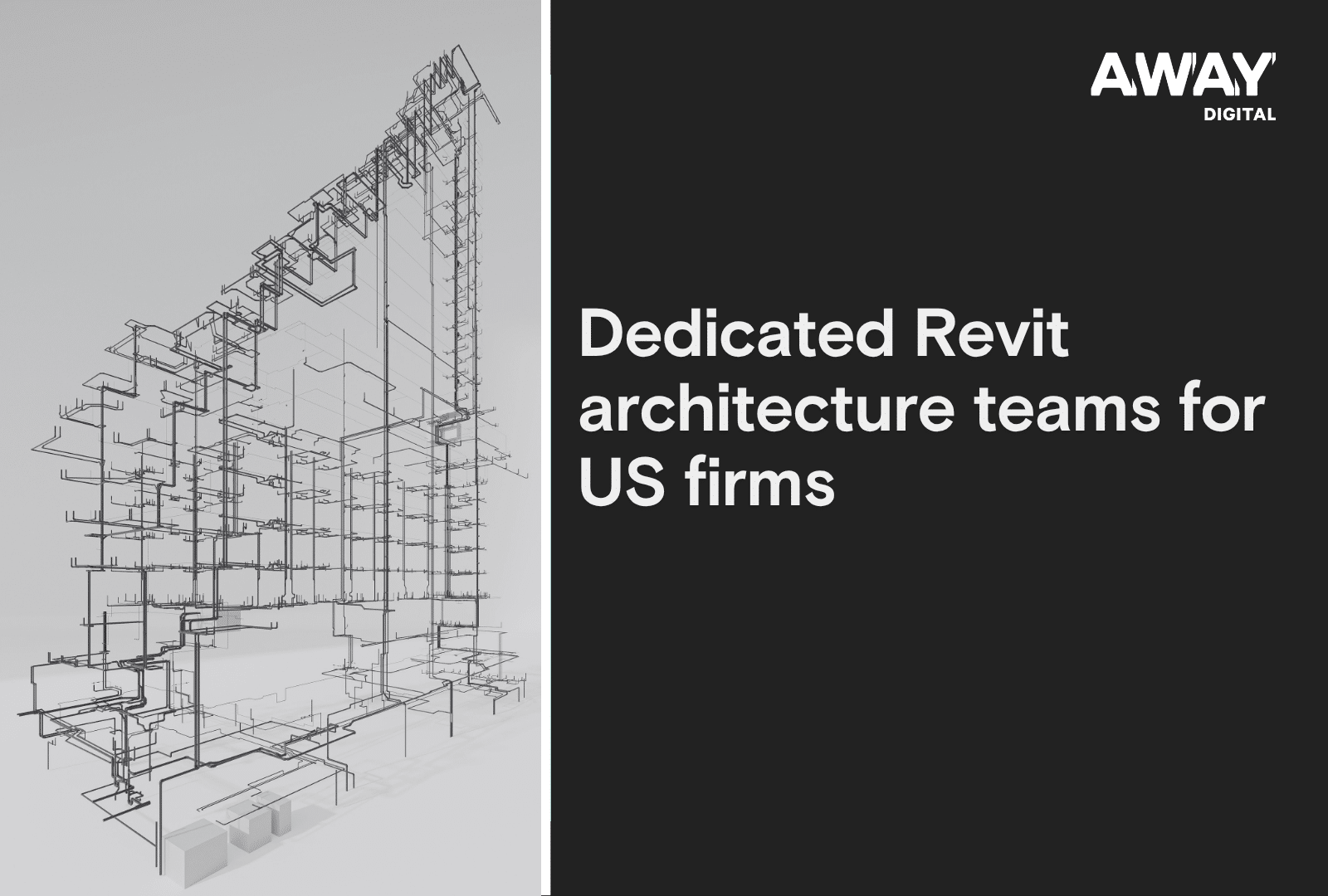
- Intelligent 3D plant and piping modeling
- Automated isometric drawing generation
- High-volume isometric production for fabrication
- Fabrication-level detailing and shop outputs
- Bills of materials extracted directly from 3D models
Our teams work across industry-standard platforms including CADworx, Bentley OpenPlant, AutoCAD Plant3D, Smart 3D and Isogen – integrating into established project ecosystems without disruption. Away Digital works with contractors across energy, oil and gas, chemical, manufacturing and mission critical sectors – environments where documentation accuracy and delivery speed aren’t negotiable. The result is documentation capacity that scales with project demand, without adding permanent overhead.
The cost of inaction is already on your schedule
When drawings run late, the impact moves downstream immediately. Fabrication pauses – crews wait – milestones slip – and recovery costs surface quietly later.
This documentation bottleneck isn’t temporary. It’s structural, driven by an aging workforce, limited intake into specialist roles, and the growing technical demands of industrial projects. As pipelines grow, the gap between engineering intent and fabrication‑ready detail continues to widen.
The contractors managing this well aren’t reacting when pressure peaks. They’re making deliberate decisions about documentation capacity early – prioritizing predictability over scramble.
To explore how industrial contractors are addressing these constraints, and how dedicated design and documentation teams support delivery certainty, see how Away Digital works with construction contractors.